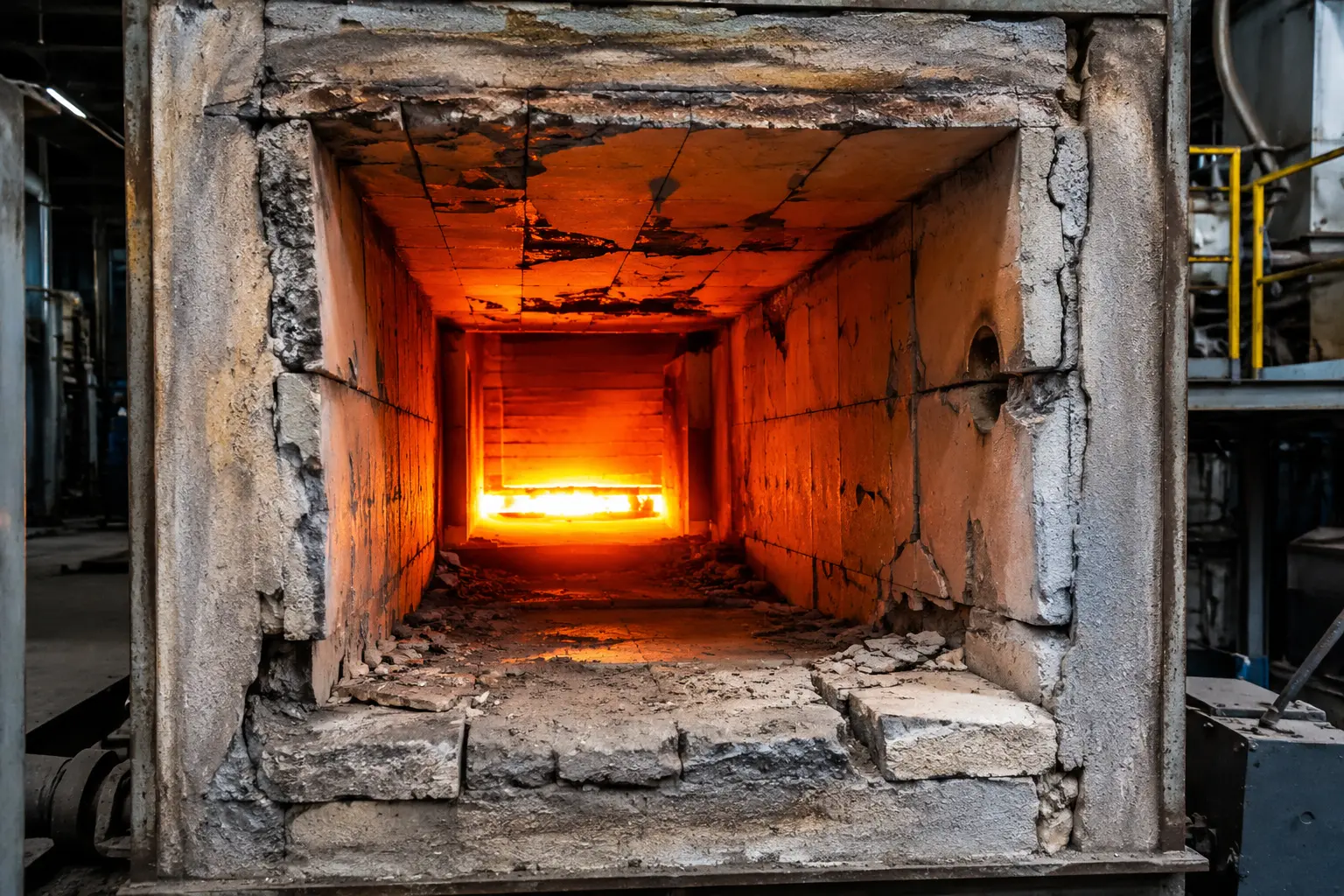
Industrial furnaces are subject to severe operating environments, including constant exposure to high temperatures, thermal cycling, mechanical erosion, and chemical corrosion. However, there are factors other than just selection and construction materials, such as operation and installation, that influence a refractory lining’s longevity. Fortunately, many of these failure modes can be prevented by plant personnel and operators. The effects of early refractory lining failure at a plant include production downtime, elevated maintenance, wasted energy, and personnel safety concerns.
Thermal Shock
One of the most frequent causes of refractory damage is thermal shock.
Thermal shock occurs when a refractory lining experiences rapid temperature changes. A furnace that is heated too quickly during startup or cooled too rapidly during shutdown can create internal stresses within the material.
Over time, these stresses may result in:
- Surface cracking
- Spalling
- Loss of structural integrity
- Reduced lining life
The risk is often higher in operations where furnaces are frequently started and stopped rather than running continuously.
Incorrect Material Selection
Not all refractory materials perform the same way under identical operating conditions.
A material that performs well in one furnace may not be suitable for another. Temperature is only one factor. Chemical exposure, abrasion, atmosphere conditions, and mechanical loading also influence performance.
For example, a refractory selected primarily for heat resistance may not provide adequate protection in an environment where chemical attack is a major concern.
Proper evaluation of operating conditions before installation helps reduce the likelihood of premature failure. Facilities looking to compare different refractory products should focus on application requirements rather than selecting materials based solely on cost.
Poor Installation Practices
Even high-quality refractory materials can underperform when installation standards are not maintained.
Common installation-related issues include:
- Improper anchoring
- Incorrect mixing ratios
- Inadequate curing
- Uneven lining thickness
- Poor joint construction
Small installation errors may not be immediately visible but can gradually weaken the lining during operation.
In many industrial projects, material quality and installation quality are equally important to overall refractory performance.
Chemical Attack
Many industrial processes expose refractory linings to aggressive chemicals, slags, gases, and molten materials.
When refractory materials are not compatible with the process environment, chemical reactions may occur within the lining. This can lead to:
- Material degradation
- Surface erosion
- Structural weakening
- Reduced service life
Industries such as steel, cement, foundry, and petrochemical operations often place significant chemical demands on refractory systems.
Regular inspections can help identify early signs of chemical wear before major damage develops.
Mechanical Wear and Abrasion
Certain furnace operations involve continuous movement of materials, particles, or process media.
particular infollowing: in the following: This movement can gradually wear away the refractory surface. Abrasion is particulain the following: common in:
- Rotary kilns
- Material handling systems
- Cyclones
- Boilers
- Cement processing equipment
As the refractory thickness decreases, the lining becomes less capable of protecting the underlying structure.
Selecting materials with appropriate abrasion resistance is often an important consideration in these environments.
Inadequate Dry-Out Procedures
For castable refractory installations, dry-out procedures play a critical role.
Moisture trapped inside the refractory must be removed in a controlled manner before the furnace reaches operating temperature.
If heating occurs too quickly, internal steam pressure can build within the material. This may cause cracking, spalling, or even explosive damage in severe cases.
Following recommended dry-out schedules helps improve long-term refractory performance and reliability.
Lack of Routine Inspection
Many refractory failures develop gradually rather than suddenly.
Small cracks, localized wear, and surface damage often provide early warning signs. However, these indicators may go unnoticed when inspection programs are inconsistent.
Routine-to-routine inspections allow maintenance teams to
- Identify wear patterns
- Monitor lining condition
- Plan maintenance activities
- Reduce unplanned shutdowns
Preventive maintenance is generally more cost-effective than emergency refractory replacement.
The Role of Proper Refractory Planning
A successful refractory system depends on more than selecting a material capable of handling high temperatures.
Material compatibility, installation quality, operating practices, maintenance procedures, and inspection programs all contribute to overall lining performance.
Industrial facilities evaluating refractory solutions should consider both product characteristics and application requirements before making decisions. Different operating environments often require different approaches to achieve long-term performance and reliability.
Conclusion
Refractory failure is rarely caused by a single factor. In most cases, it results from a combination of operating conditions, material selection, installation quality, and maintenance practices.
By understanding the common causes of failure and addressing them proactively, industrial facilities can improve furnace reliability, reduce maintenance costs, and extend refractory service life