
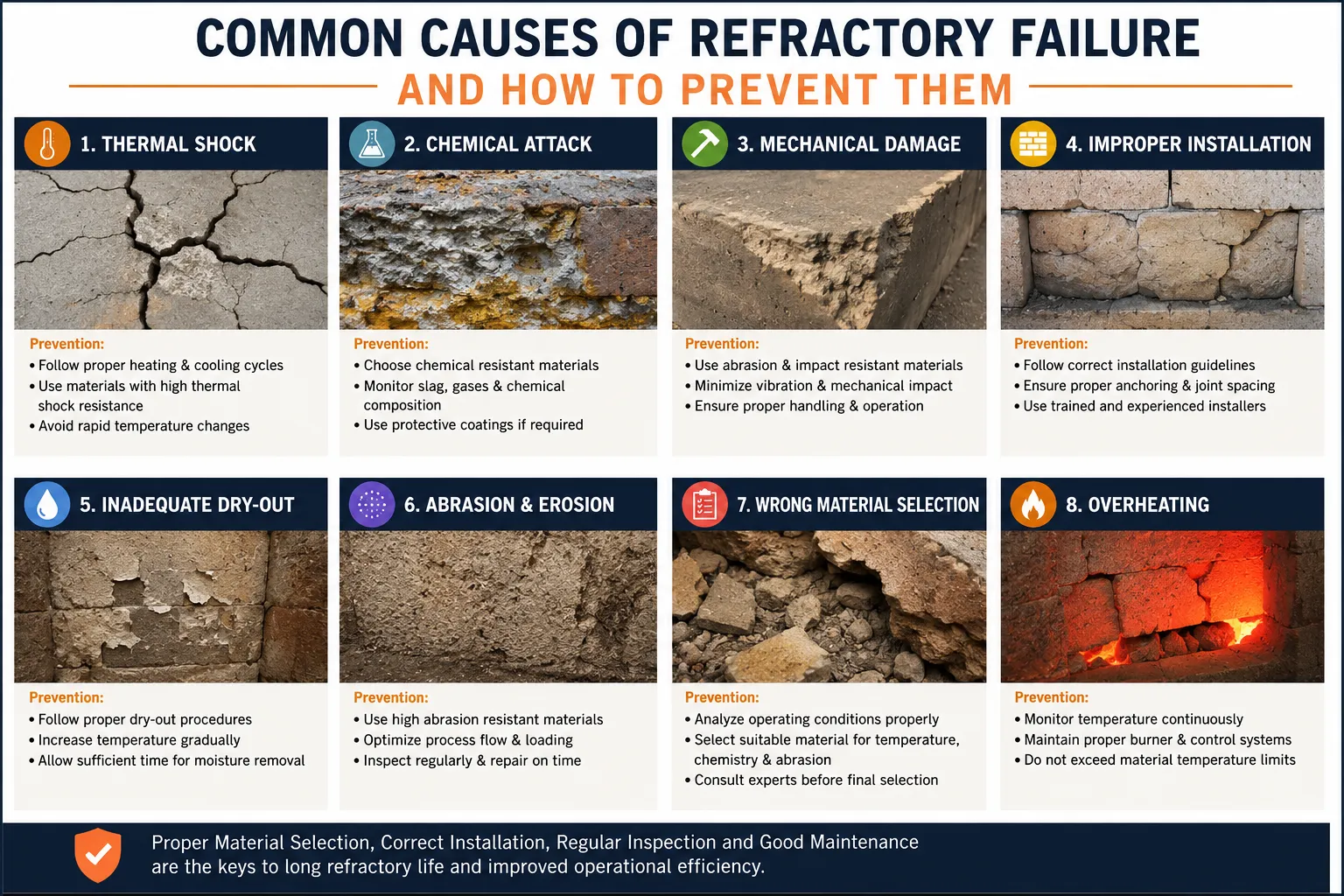
Refractory materials are used for products and processes which require working at very high temperatures, such as steelmaking, cement, glass, foundry, power plants and petrochemical plants. They are often high-quality materials, which have been carefully formulated and installed, but they still may fail due to poor selection, installation or maintenance.
Failure of the refractory lining can result in long periods of costly downtime, loss of efficiency, safety problems and expensive repair work. Ways to prevent some of the more usual causes of damage to a refractory lining are described below.
What Is Refractory Failure?
Refractory failure is the inability of a refractory lining to operate effectively at the working temperature. Typical failure modes include cracking, spalling, erosion, chemical corrosion, overuse, or total disintegration. Most failures are multi-factorial, involving combined thermal, mechanical, and chemical loading.
1. Thermal Shock
Thermal shock is one of the most common reasons for refractory failure. It occurs when refractory materials experience rapid temperature changes, causing expansion and contraction within the structure.
Causes:
- Sudden heating during startup
- Rapid cooling during shutdown
- Uneven temperature distribution
- Frequent temperature cycling
Effects:
- Surface cracking
- Internal stress development
- Material spalling
- Reduced structural integrity
Prevention:
- Follow controlled heating and cooling schedules.
- Use refractory materials with high thermal shock resistance.
- Avoid sudden operational temperature changes.
- Conduct regular inspections for early crack detection.
2. Chemical Attack
Industrial furnaces often operate in environments containing corrosive chemicals, molten metals, slags, gases, and alkalis. These substances can react with refractory materials and gradually weaken their structure.
Causes:
- Acidic or basic slag reactions
- Corrosive gases
- Molten metal penetration
- Chemical contamination
Effects:
- Material degradation
- Loss of strength
- Increased porosity
- Premature lining failure
Prevention:
- Select refractory materials compatible with process chemistry.
- Monitor slag composition regularly.
- Use protective coatings when necessary.
- Maintain proper operating conditions.
3. Mechanical Damage
Refractory linings are often exposed to mechanical stresses caused by equipment movement, raw material impact, vibration, and abrasion.
Causes:
- Heavy material loading
- Equipment vibration
- Physical impact
- Structural movement
Effects:
- Chipping and cracking
- Surface wear
- Lining displacement
- Reduced service life
Prevention:
- Install impact-resistant refractory materials.
- Minimise excessive vibration.
- Use proper material handling procedures.
- Perform routine maintenance inspections.
4. Improper Installation
Even premium refractory products can fail prematurely if installation is not carried out correctly. Installation quality has a direct impact on refractory performance and durability.
Common Installation Errors:
- Incorrect mixing ratios
- Poor anchoring systems
- Inadequate joint spacing
- Improper curing procedures
Effects:
- Weak structural bonding
- Early crack formation
- Uneven expansion
- Reduced thermal efficiency
Prevention:
- Follow manufacturer guidelines carefully.
- Use trained installation professionals.
- Ensure proper curing and drying.
- Conduct quality inspections before commissioning.
5. Inadequate Dry-Out Procedures
Many refractory materials contain moisture after installation. If this moisture is not removed properly, steam pressure can build up during heating and damage the lining.
Causes:
- Rapid startup after installation
- Insufficient drying time
- Ignoring dry-out schedules
Effects:
- Explosive spalling
- Internal cracking
- Structural weakening
Prevention:
- Follow recommended dry-out procedures.
- Use controlled heating rates.
- Monitor temperature progression carefully.
- Allow sufficient curing time before operation.
6. Abrasion and Erosion
Continuous movement of solid particles, gases, or molten materials can gradually wear away refractory surfaces.
Industries Most Affected:
- Cement plants
- Steel plants
- Foundries
- Power generation facilities
Effects:
- Surface thinning
- Material loss
- Reduced insulation performance
- Increased maintenance costs
Prevention:
- Use abrasion-resistant refractory grades.
- Optimise process flow conditions.
- Conduct periodic thickness inspections.
- Replace worn sections before failure occurs.
7. Refractory Material Selection Errors
One of the biggest mistakes industries make is selecting refractory materials based solely on cost rather than operational requirements.
Common Selection Mistakes:
- Incorrect temperature rating
- Poor chemical compatibility
- Inadequate mechanical strength
- Unsuitable thermal properties
Effects:
- Frequent maintenance
- Reduced service life
- Higher operational costs
Prevention:
- Analyse process conditions thoroughly.
- Consult refractory experts before purchasing.
- Consider lifecycle costs rather than initial price.
- Match refractory properties to operating environments.
8. Overheating
Every refractory material has a maximum service temperature. Operating beyond this limit can severely damage the lining.
Causes:
- Process control failures
- Burner malfunctions
- Excessive furnace temperatures
Effects:
- Structural breakdown
- Increased porosity
- Loss of strength
- Accelerated wear
Prevention:
- Monitor temperatures continuously.
- Maintain process controls.
- Use temperature-rated refractory products.
- Inspect burners and heating systems regularly.
Best Practices for Extending Refractory Life
To maximise refractory performance, industries should adopt a proactive maintenance strategy.
Recommended Practices:
- Schedule regular inspections.
- Monitor operating temperatures.
- Maintain proper startup and shutdown procedures.
- Train personnel in refractory handling.
- Replace damaged sections promptly.
- Use high-quality refractory products from trusted suppliers.
Conclusion
Failure of refractory material can cause serious problems relating to an increase in production costs, downtime, reduced safety, and decreased product quality. Although factors like thermal shock, chemical attack, abrasion, incorrect installation and overheating are known causes of refractory life reduction, most such failures are avoidable by appropriate material selection, installation and maintenance.
By understanding the causes of refractory wear and failure, industries can take proactive measures to extend equipment life and improve operational efficiency. Partnering with an experienced refractory materials manufacturer and using high-quality refractory products can help minimise downtime, reduce maintenance costs, and ensure long-term performance in high-temperature applications.
The ongoing requirement for higher demands of the production processes will ensure refractory manageability continues to be an essential criterion for the long-term success of the operation.