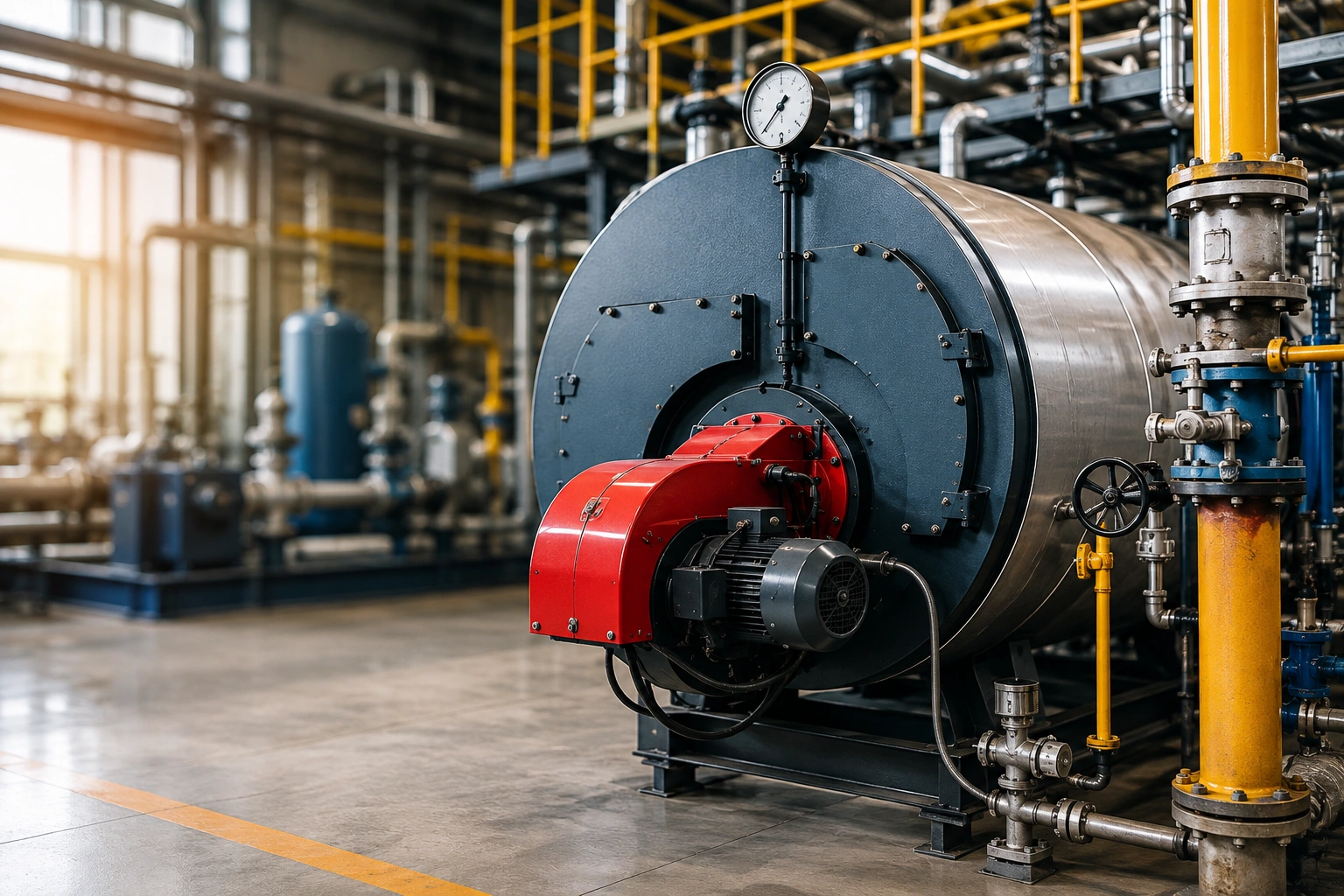
Industrial boilers are among the most critical assets in manufacturing and process plants, generating the steam or hot water that powers everything from production lines to heating systems. But because boilers operate under high pressure and high temperature, even small lapses in maintenance or monitoring can lead to serious operational disruptions. Understanding common boiler safety issues and their solutions helps plant teams reduce downtime, protect equipment, and maintain a safer working environment. This article looks at the safety issues that industrial boilers commonly face, along with the practical steps used across manufacturing and process industries to address them. For plants that rely on continuous, trouble-free boiler operation, this is a subject worth revisiting regularly, not just during audits or breakdowns.
Why Boiler Safety Is Important
A boiler operates by heating water or generating steam under pressure, which means any fault in its systems can quickly escalate. Beyond the risk to equipment and production continuity, poor boiler safety practices can lead to unplanned shutdowns, increased fuel consumption, and higher maintenance costs over time.
Consistent boiler operation safety isn’t just about avoiding failures — it’s about ensuring the equipment performs efficiently over its working life. Plants that follow structured inspection and maintenance routines typically experience fewer unexpected issues and get more consistent output from their boiler systems.
Common Boiler Safety Issues and Solutions
1. Low Water Level
One of the most frequent boiler safety issues is the water level dropping below the safe operating range. This can happen due to feed pump failure, blocked lines, or faulty level controls. If undetected, low water levels can cause overheating of boiler tubes and long-term damage to the shell.
Solution: Fit boilers with reliable low-water cutoff devices and test them on a scheduled basis. Regularly verify feed water pump performance and keep level gauges clean and calibrated so operators can read them accurately at all times.
2. Overpressure Conditions
Boilers are designed to operate within a specific pressure range. Overpressure can occur due to control malfunctions, blocked steam lines, or safety valve issues, putting stress on the boiler shell and associated piping.
Solution: Install pressure gauges that are checked routinely, and ensure pressure control systems are inspected as part of a standard maintenance cycle. Cross-check readings across multiple instruments where possible to confirm accuracy.
3. Scale and Sludge Formation
Poor water quality leads to scale buildup on heat transfer surfaces and sludge accumulation at the bottom of the boiler. Scale reduces heat transfer efficiency and can cause localized overheating, while sludge can interfere with proper water circulation.
Solution: Implement a water treatment programme suited to your boiler’s feed water source, including softening, deaeration, and chemical dosing as appropriate. Regular blowdown procedures help remove accumulated sludge and dissolved solids before they cause damage.
4. Steam or Hot Water Leakage
Leaks in pipe joints, valves, or fittings are a common issue in aging or poorly maintained boiler systems. Apart from safety concerns, leaks reduce system efficiency and increase fuel and water consumption.
Solution: Conduct routine visual inspections of piping, joints, and valve packing. Replace worn gaskets and seals promptly, and address minor leaks before they develop into larger failures.
5. Burner Malfunction
Burner problems — such as improper flame patterns, ignition failures, or fuel supply irregularities — can affect combustion efficiency and pose safety concerns if not addressed quickly.
Solution: Schedule regular burner inspection and cleaning, check fuel supply lines for blockages or leaks, and ensure flame safeguard controls are functioning correctly. Combustion efficiency checks also help identify early signs of burner wear.
6. Corrosion
Internal and external corrosion weakens boiler components over time, particularly in systems with inconsistent water treatment or exposure to moisture and oxygen. Left unaddressed, corrosion can compromise structural integrity.
Solution: Maintain proper water chemistry to minimize dissolved oxygen and pH imbalances. Conduct periodic internal inspections, and apply protective coatings or insulation to external surfaces where corrosion risk is higher.
7. Faulty Safety Valves
Safety valves are the boiler’s primary protection against overpressure. If they stick, leak, or fail to lift at the set pressure, the entire safety system is compromised.
Solution: Test safety valves at defined intervals as part of routine maintenance, and replace any valve that shows signs of wear, corrosion, or inconsistent performance. Keep valve testing records as part of the plant’s maintenance documentation.
8. Inadequate Operator Monitoring
Even well-maintained boilers can develop problems if operators aren’t consistently monitoring key parameters like water level, pressure, temperature, and combustion performance.
Solution: Establish clear monitoring checklists and shift-handover procedures. Ensure operators are trained to recognize early warning signs and know the correct escalation steps when readings fall outside normal ranges.
Preventive Maintenance Checklist
A structured preventive maintenance routine is one of the most effective boiler safety solutions available to plant operators. A general checklist typically includes:
- Daily monitoring of water level, pressure, and temperature readings
- Routine blowdown to remove sludge and dissolved solids
- Scheduled water quality testing and chemical treatment adjustments
- Periodic safety valve testing and calibration checks
- Regular inspection of burners, fuel lines, and combustion controls
- Visual checks of piping, joints, and insulation for leaks or wear
- Documented internal and external inspections for corrosion
- Review of control systems and instrumentation accuracy
Following this kind of checklist consistently supports better industrial boiler safety and helps identify small issues before they become larger operational problems.
Role of Trained Boiler Operation Support
Boiler maintenance safety depends heavily on having personnel who understand the equipment’s specific operating conditions. Trained operators are better equipped to interpret readings correctly, respond appropriately to abnormal conditions, and follow maintenance schedules without gaps.
Many manufacturing and process plants choose to work with dedicated boiler operation and maintenance support services to ensure this level of consistency, particularly where in-house teams are stretched across multiple responsibilities. This kind of support can help maintain steady monitoring routines, structured maintenance records, and timely attention to routine servicing needs — all of which contribute directly to safer, more reliable boiler performance.
Plants working with an industrial boiler operation contractor often find it easier to maintain these routines without disruption to core production activities.
Conclusion
Addressing common boiler safety issues and their solutions requires a combination of routine inspection, proper water treatment, consistent pressure monitoring, and trained operator oversight. None of these practices are complex on their own, but together they form the foundation of safe, efficient boiler operation. Plants that treat boiler safety as an ongoing responsibility — rather than a one-time setup — tend to see fewer disruptions and more predictable performance from their systems. UBE Groups works with manufacturing and process industry clients to support these day-to-day operational needs through structured boiler operation and maintenance support services.
FAQs
1. What are the most common boiler safety issues in industrial plants?
The most frequent issues include low water levels, overpressure conditions, scale and sludge buildup, leaks, burner malfunctions, corrosion, faulty safety valves, and inconsistent operator monitoring.
2. How often should safety valves be tested?
Safety valves should be tested at regular intervals as defined by the boiler manufacturer’s guidelines and the plant’s maintenance schedule, with records maintained for each test.
3. Why is water treatment important for boiler safety?
Proper water treatment reduces scale formation, sludge accumulation, and corrosion, all of which can affect boiler efficiency and long-term reliability if left unmanaged.
4. What role do operators play in boiler safety?
Operators are responsible for monitoring key parameters like water level, pressure, and temperature, and for recognizing early signs of abnormal conditions before they escalate.
5. Why do industries use external boiler operation and maintenance support?
Many plants use dedicated operation and maintenance support to ensure consistent monitoring, timely servicing, and proper documentation, especially when internal teams have limited bandwidth for daily boiler oversight.
Suggested internal links: Boiler Operational Contractor in India | Thermopac Operational Contractor in India