
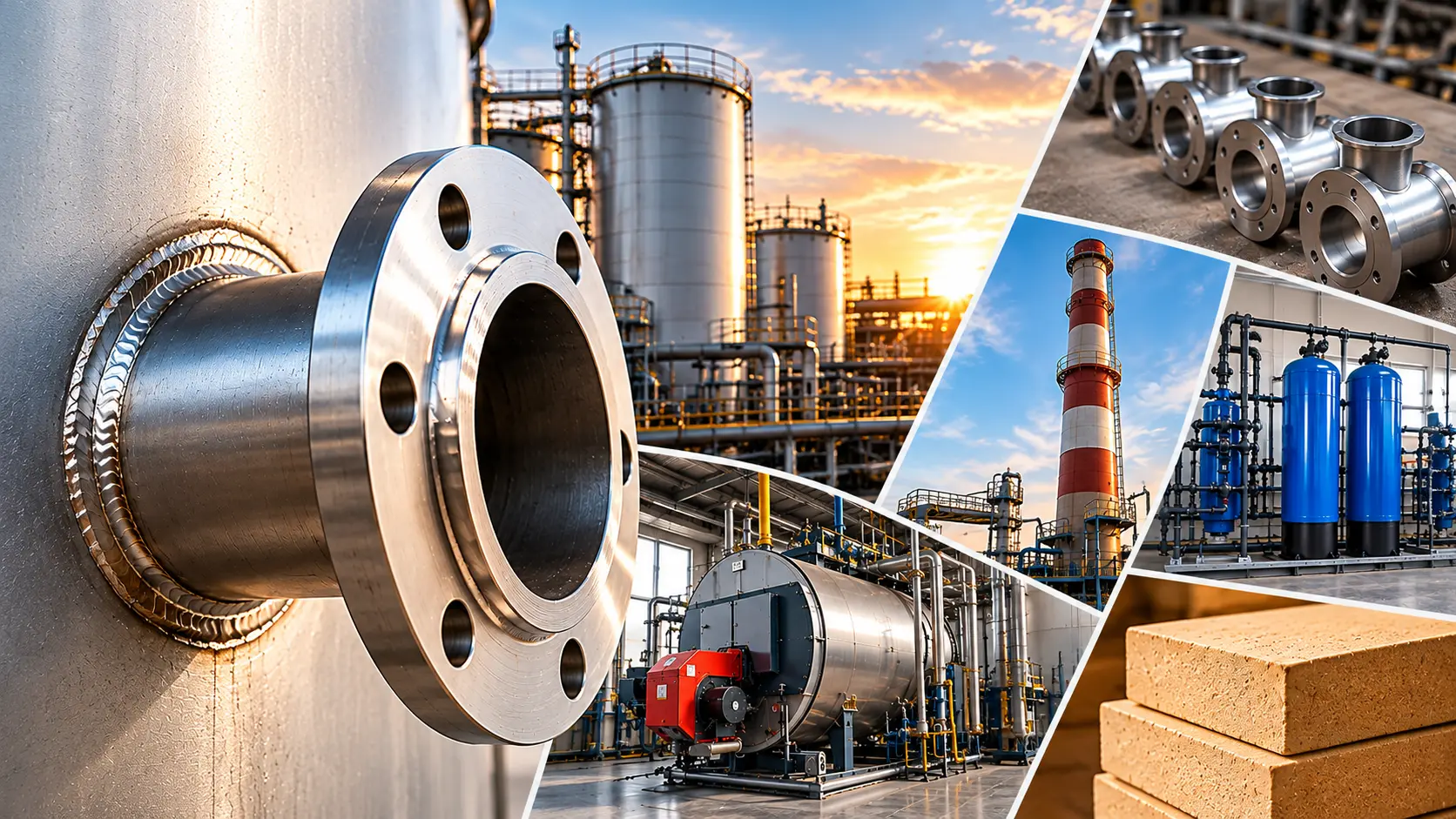
Industrial plants rely on a wide range of components to maintain controlled and efficient operations. While large equipment often receives the most attention, smaller fabricated parts can also have an important role in how a process system performs.
Among these components, nozzles are used in tanks, vessels, pipelines and other industrial equipment for functions such as fluid entry, discharge, connection and process integration. Their design and material selection can vary significantly depending on the application.
Why Component Selection Matters
Every industrial facility operates under its own conditions. Temperature, pressure, fluid characteristics, equipment dimensions and the intended process can all influence the type of component required.
A nozzle that works for one application may not necessarily be suitable for another. Factors such as material compatibility, dimensions, connection type and fabrication requirements should therefore be considered before finalising a component.
For industries working with mild steel equipment, MS nozzle manufacturing can be relevant for applications where this material is suitable for the operating environment.
Understanding Mild Steel Applications
Mild steel is widely used in industrial fabrication because of its practical characteristics and suitability for many general-purpose applications.
Industrial tanks, chimneys, vessels and related fabricated structures may incorporate mild steel components depending on their design and operating conditions. In such systems, properly fabricated connections can help integrate different sections of the equipment.
The requirements can differ from project to project. Dimensions, wall thickness, connection arrangements and installation conditions may need to be considered during fabrication.
Where Nozzles Are Used
Nozzles can serve different purposes depending on the equipment in which they are installed. In tanks and vessels, they may provide points for inlet or outlet connections. In other process equipment, they can support connections with piping or auxiliary systems.
Because their function is closely connected to the surrounding equipment, fabrication should be approached with the complete application in mind.
For example, an industrial facility planning storage equipment may also need to consider how piping connections will be integrated into the tank. In such cases, MS tank manufacturing solutions can be evaluated alongside the component requirements.
Material Selection for Different Environments
Not every industrial environment has the same material requirements. Facilities dealing with moisture, chemicals, elevated temperatures or other demanding conditions may need to consider alternative materials.
Stainless steel can be considered in applications where its characteristics are more appropriate for the operating environment. Businesses requiring such components can explore stainless steel nozzle solutions according to their specific requirements.
The choice between different materials should be based on the application rather than simply selecting one option for every project.
Fabrication Requires Attention to Detail
Good industrial fabrication involves more than producing a component to a particular shape. The component needs to fit the equipment and perform its intended function within the overall system.
Measurements, connection points, material specifications and fabrication requirements all need to be considered. Proper coordination between equipment design and component fabrication can also reduce complications during installation.
This becomes particularly important when components are being prepared for existing equipment, where dimensions and connection arrangements may already be fixed.
Supporting Broader Industrial Requirements
Industrial projects frequently involve several interconnected requirements. A facility may require tanks, chimneys, nozzles, water treatment equipment, refractory materials or operational support at different stages.
For example, facilities working with exhaust systems may require fabricated structures such as MS chimneys, while process facilities may need equipment designed around specific water treatment requirements.
Similarly, plants operating thermal systems may require operational assistance alongside equipment and spare parts.
Planning Before Procurement
Before ordering fabricated industrial components, businesses should clearly understand the application and operating environment. Information such as equipment dimensions, required connections, material preferences and installation conditions can help suppliers understand the requirement more accurately.
Clear technical communication at the beginning of a project can also make fabrication and installation more straightforward.
Rather than treating individual components as isolated products, it is useful to consider how they will function within the complete industrial system.
A Practical Approach to Industrial Fabrication
Reliable industrial systems are built through careful planning, suitable materials and components that are designed around their intended applications. Nozzles may be relatively small compared with large tanks or process equipment, but their role in connecting different parts of a system makes their selection important.
For businesses involved in manufacturing and process industries, evaluating fabrication requirements according to the actual operating conditions can help create more practical and dependable installations.
UB Engineering Global provides manufacturing, supply and operational support across a range of industrial requirements. Businesses can review the relevant solutions and discuss their technical requirements before proceeding with fabrication or equipment procurement.