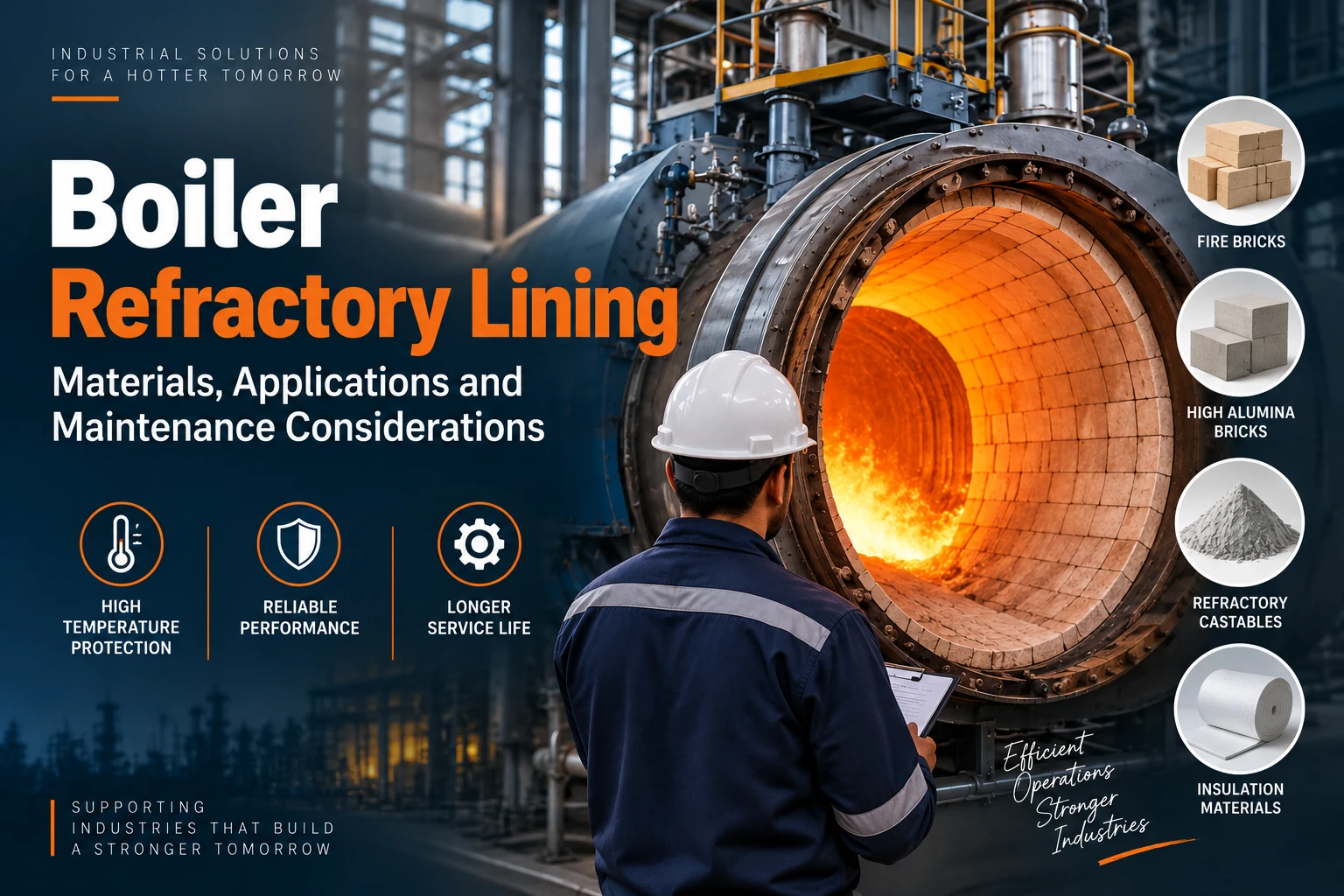
The Refractory lining of the boiler protects the inner surfaces of the boiler exposed to high temperature, combustion gases and cyclic temperature changes. When installed and specified correctly, it can help extend the life of a boiler by protecting structure, retaining heat and minimizing liner failures.
Refractory for Industrial Boiler Industry Industrial boilers will be working under harsh conditions, refractory selection should consider the design of the boiler, working temperature, the state of the fuel and the location of lining. Typical refractory products may include fire bricks, high alumina bricks, refractory castables, refractory mortars and insulation materials.
Choosing the proper combination of material selection, installation and maintenance is critical to achieve reliable boiler operation in industrial plants
What Is Boiler Refractory Lining?
Refractory lining of boiler boiler refractory lining Refractory lining on the boiler is a heat resistant lining installed on those surfaces of a boiler that are subject to high heat and combustion conditions.
For certain boiler design types and applications refractory products may be installed in the vicinity of the furnace areas, burners, floors, walls and other locations subject to high heat or thermal stress.
Refractory should be selected based on temperature, thermal cycling, service conditions, internal boiler conditions and mechanical wear
Why Is Refractory Lining Important in Boilers?
Firstly it shields the boiler structure from the direct exposure of heat. The refractory layer also helps in retaining the heat within the combustion chamber and minimize heat transfer to other parts.
A properly chosen refractory lining can also play a key role in accommodating multiple heating and cooling cycles. This is especially relevant when the boiler is in an industrial environment where it may be subject to frequent load swings, shutdowns and startups.
Problems including cracking, erosion, hot spots and linings failing early can result when refractory is improperly installed or selected..
Common Materials Used for Boiler Refractory Lining
Different sections of a boiler may require different refractory materials. The selection should be based on the actual operating conditions rather than using one material throughout the system.
Fire Bricks
Fire bricks are commonly used for high-temperature lining applications where a durable brick structure is required. Their suitability depends on the operating conditions and the specific area of the boiler.
For applications requiring dedicated fire-brick information, see the UB Groups fire bricks manufacturer page.
High Alumina Bricks
High alumina bricks contain a higher proportion of alumina and are used for demanding high-temperature applications. The required grade depends on the thermal and mechanical conditions of the boiler.
They can be considered where higher-temperature performance and structural stability are important.
Refractory Castables
Refractory castables are monolithic materials that can be mixed and placed to form a continuous refractory lining. They are useful in areas where brick installation may not be practical or where a cast lining is preferred.
Boiler castables may be used in areas such as furnace sections, burner zones and other high-temperature locations, depending on the boiler design.
Refractory Mortars
Refractory mortars are used for joining refractory bricks during brick-lining work. The mortar needs to be compatible with the refractory bricks and the operating conditions of the lining.
Insulation Materials
Insulating refractory materials and ceramic fiber products can be used where reducing heat transfer is an important requirement. Their application depends on the temperature and location within the boiler system.
For a broader overview of refractory products and their industrial applications, readers can refer to the UB Groups refractory materials manufacturer page.
Where Is Refractory Lining Used in a Boiler?
Boiler refractory systems can be required in several high-temperature areas, depending on the equipment design.
Typical applications may include:
- Boiler furnace areas
- Burner zones
- Furnace floors
- Boiler walls
- High-temperature combustion areas
- Areas requiring refractory replacement during shutdowns
The exact lining arrangement should be determined according to the boiler design and operating conditions.
Factors to Consider When Selecting Boiler Refractory Materials
Choosing a refractory material should not be based on temperature alone.
Important considerations include:
Operating Temperature
The material must be suitable for the temperature conditions in the specific boiler area.
Thermal Cycling
Repeated heating and cooling can place stress on refractory materials. The selected material should be appropriate for the thermal cycles experienced during operation.
Mechanical Wear
Some areas may experience abrasion or mechanical impact. These locations may require materials with suitable strength and wear resistance.
Chemical Conditions
Combustion gases, ash and other process conditions can affect refractory performance. Material selection should therefore consider the operating environment.
Installation Conditions
Even a suitable refractory material can perform poorly if it is installed incorrectly. Mixing, placement, curing and controlled dry-out are particularly important for castable systems.
Boiler Refractory Installation and Maintenance
Proper installation has a direct effect on refractory service life.
For brick lining, correct brick selection, alignment, mortar application and expansion provisions are important. For castables, the installation process requires control over mixing, water addition, placement, curing and dry-out.
After installation, regular inspection can help identify early signs of damage.
Common warning signs include:
- Cracks in the refractory lining
- Spalling or surface deterioration
- Erosion and thinning
- Loose or damaged bricks
- Hot spots on the external shell
- Localized refractory failure
Identifying these issues early can allow maintenance teams to address damaged sections before they develop into larger problems.
UB Groups also provides refractory installation and maintenance services through its refractory works operations, covering boiler refractory lining, castable application, refractory replacement and shutdown maintenance support.
Boiler Refractory Maintenance During Shutdowns
2. Inspection of refractory systems is possible with scheduled boiler shutdowns. 3. Repair of any broken refractory parts is possible.
Cracks and hot spots are easy to spot for maintenance personnel during a shut down. As such, any damaged sections of lining can be repaired or replaced during the maintenance shutdown as required.
Ensuring routine inspections and scheduled maintenance can reduce the risk of any unforeseen refractory related issues
Boiler Refractory Lining and Overall Boiler Performance
Refractory lining is a piece of a much larger puzzle in overall boiler performance, however, the state of this lining can directly impact your heat management and equipment safeguard.
A refractory system that is correctly installed and maintained in conjunction with correctly integrated system offers the following advantages: they serve as a form of protection to the high temperature zone and they help to enable a stable boiler operation.
When it comes to industrial plants, the design of the refractory should be taken into account in addition to the operation, repair, and operating status of the boiler.
Conclusion
The refractory lining of the boiler can provide protection for part of the boiler from high temperature radiation, and can also keep the boiler working place in the desired working environment. The refractory lining can be fire bricks, high alumina bricks, refractory castables, mortar, insulation material.
The most suitable solution will depend on the operating temperature, the degree of thermal cycling, the mechanical conditions the refractory will be subjected to, the chemical composition of the environment and the installation conditions. Correct installation, curing and dry-out of the castable systems, along with periodic inspection and scheduled maintenance, are just as critical to obtain long service life from your refractory.
For Boiler Refractory Materials, Refractory Lining Installations or Refractory Lining Maintenance in your Plant Let UB Groups know the boiler type, application, operating conditions and the refractory needs in your plant