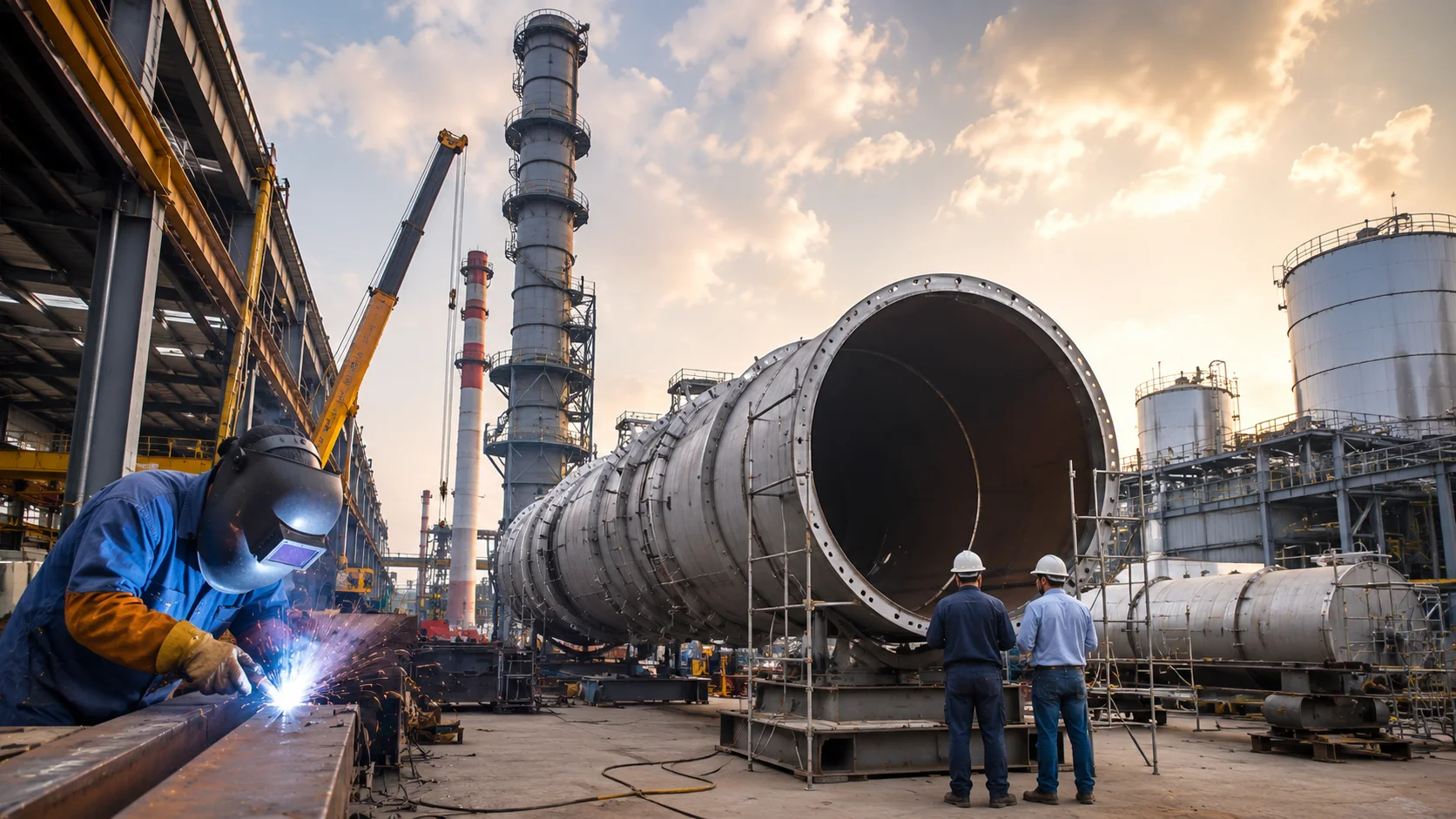
Industrial chimneys are among the most critical components of manufacturing plants, power generation facilities, processing industries, and heavy engineering operations. Designed to safely discharge exhaust gases, fumes, and combustion by-products into the atmosphere, industrial chimneys play a vital role in maintaining operational efficiency, environmental compliance, and workplace safety.
As industrial facilities continue to expand across India, the demand for reliable chimney systems has increased significantly. Modern industrial chimney fabrication requires a combination of engineering expertise, material selection, structural analysis, and compliance with industrial standards. From thermal power plants and boilers to chemical processing units and manufacturing facilities, properly designed chimneys contribute directly to plant performance and environmental management.
For organizations seeking comprehensive Industrial Engineering Solutions, understanding the design principles, fabrication process, and applications of industrial chimneys is essential.
Understanding Industrial Chimneys
An industrial chimney is a vertical structure designed to release flue gases, smoke, and other emissions generated during industrial operations. The primary objective is to disperse pollutants at a sufficient height to minimize their impact on surrounding areas.
Industrial chimneys are commonly installed in:
- Manufacturing plants
- Boiler houses
- Chemical industries
- Food processing facilities
- Textile industries
- Power generation units
- Steel plants
- Cement industries
- Refineries
- Engineering facilities
The effectiveness of a chimney depends on several factors including height, diameter, material selection, structural stability, and environmental conditions.
Why Industrial Chimneys Are Important
Industrial chimneys serve several critical functions beyond simple exhaust management.
Safe Emission Discharge
Industrial processes often generate hot gases and emissions. Chimneys help direct these gases safely away from personnel and operational areas.
Environmental Compliance
Regulatory bodies require industries to maintain emission standards. Properly designed chimneys assist in meeting environmental regulations by ensuring effective pollutant dispersion.
Operational Efficiency
Efficient draft generation improves combustion performance in boilers and furnaces, reducing energy losses and improving productivity.
Worker Safety
By removing harmful gases from production areas, chimneys contribute significantly to workplace health and safety.
Equipment Protection
Effective exhaust systems reduce heat accumulation and prevent damage to industrial equipment.
Types of Industrial Chimneys
Different industries require different chimney configurations depending on operational requirements.
Self-Supported Steel Chimneys
These chimneys are designed as free-standing structures capable of supporting their own weight and wind loads.
Advantages
- Lower maintenance requirements
- Suitable for medium-height installations
- Cost-effective for many industrial applications
- Faster installation
Common Applications
- Boiler systems
- Manufacturing plants
- Processing industries
Guyed Steel Chimneys
Guyed chimneys use tensioned cables for structural support.
Advantages
- Economical for greater heights
- Reduced steel consumption
- Suitable for large industrial facilities
Common Applications
- Power plants
- Large manufacturing complexes
- Industrial process plants
RCC Chimneys
Reinforced Cement Concrete (RCC) chimneys are widely used in large-scale industrial operations.
Advantages
- Long service life
- Excellent structural strength
- High resistance to weather conditions
Common Applications
- Thermal power stations
- Cement plants
- Refineries
FRP Chimneys
Fiber Reinforced Plastic chimneys are preferred in corrosive environments.
Advantages
- Corrosion resistance
- Lightweight construction
- Lower maintenance
Common Applications
- Chemical industries
- Acid processing plants
- Specialized manufacturing facilities
Key Design Considerations in Industrial Chimney Fabrication
Successful industrial chimney fabrication begins with proper engineering design.
Chimney Height
Height is one of the most important factors affecting pollutant dispersion.
Engineers determine chimney height based on:
- Type of emissions
- Environmental regulations
- Surrounding structures
- Local wind conditions
- Process requirements
A properly designed height ensures effective dispersion while maintaining structural stability.
Diameter Selection
The internal diameter affects gas velocity and draft performance.
Factors considered include:
- Gas volume
- Temperature
- Pressure requirements
- Fuel type
- Boiler capacity
Improper sizing can reduce efficiency and increase operating costs.
Wind Load Analysis
Industrial chimneys are constantly exposed to wind forces.
Structural engineers evaluate:
- Wind speed
- Seismic conditions
- Dynamic loading
- Vibration effects
This analysis helps ensure long-term structural integrity.
Thermal Stress Management
Chimneys operate under significant temperature variations.
Proper design includes:
- Expansion joints
- Thermal insulation
- Flexible connections
- Stress-relief mechanisms
These features prevent cracking and structural damage.
Corrosion Protection
Industrial exhaust gases often contain corrosive substances.
Protective measures may include:
- High-grade steel materials
- Protective coatings
- Refractory linings
- Corrosion-resistant alloys
These solutions increase equipment lifespan and reduce maintenance costs.
Materials Used in Industrial Chimney Fabrication
Material selection directly influences durability, safety, and lifecycle costs.
Mild Steel (MS)
MS is widely used for industrial chimney fabrication due to its strength and fabrication flexibility.
Benefits include:
- Cost-effectiveness
- Easy fabrication
- Structural reliability
- Wide availability
Industries often rely on companies specializing in MS Tank Fabrication and industrial steel structures to manufacture chimney components.
Stainless Steel (SS)
Stainless steel is preferred when corrosion resistance is essential.
Advantages include:
- High durability
- Excellent corrosion resistance
- Low maintenance
- Long service life
Many facilities that use industrial tanks manufactured by an SS Tank
also utilize stainless steel chimneys for corrosive applications.
Refractory Materials
High-temperature industrial processes often require refractory lining inside chimneys.
Benefits of Refractory Linings
- Thermal protection
- Reduced heat loss
- Improved operational efficiency
- Enhanced structural life
Organizations working with a reliable Refractory Manufacturer India can obtain customized refractory solutions designed for specific industrial applications.
Role of Refractory Materials in Industrial Chimneys
Refractory systems are critical for chimneys exposed to extreme temperatures.
Fire Bricks
High-quality fire bricks provide thermal insulation and structural protection.
Applications include:
- Boiler chimneys
- Furnace exhaust systems
- Kiln installations
- Industrial heating units
Working with an experienced Fire Bricks Manufacturer ensures consistent thermal performance and durability.
Castables and Refractory Linings
Modern refractory solutions may include:
- Insulating castables
- Dense castables
- Refractory mortars
- Ceramic fiber products
These materials help extend chimney service life while improving energy efficiency.
Industrial Chimney Fabrication Process
Professional fabrication involves multiple engineering stages.
Design and Engineering
The process begins with:
- Site assessment
- Structural calculations
- Draft analysis
- Material selection
- Compliance evaluation
Engineering accuracy during this stage minimizes future operational issues.
Material Procurement
Quality fabrication depends on certified materials and components.
Manufacturers source:
- Structural steel
- Stainless steel sheets
- Refractory materials
- Fasteners
- Coating systems
Material traceability is essential for quality assurance.
Fabrication
The fabrication stage involves:
- Plate cutting
- Rolling
- Welding
- Assembly
- Quality inspection
Advanced fabrication facilities often perform these operations alongside manufacturing of industrial tanks and vessels.
Surface Treatment
Protective coatings enhance durability.
Common treatments include:
- Sand blasting
- Epoxy coatings
- Heat-resistant paints
- Anti-corrosion systems
Installation and Commissioning
Final installation includes:
- Structural erection
- Alignment verification
- Safety inspections
- Performance testing
Proper commissioning ensures safe and efficient operation.
Integration with Industrial Systems
Industrial chimneys often function as part of larger engineering systems.
These systems may include:
Industrial Vessels
Facilities utilizing products from an Industrial Vessels Manufacturer often require integrated exhaust and ventilation systems connected to process equipment.
Boiler Systems
Industrial boilers rely on properly designed chimneys to maintain draft efficiency.
Reliable chimney performance supports:
- Fuel efficiency
- Reduced emissions
- Stable combustion
Industries sourcing components from a Boiler Spare Parts Manufacturer frequently upgrade chimney systems to optimize overall boiler performance.
Pipeline Networks
Modern plants use extensive pipeline systems to transport gases and process fluids.
Professional pipeline installation ensures:
- Safe operation
- Reduced pressure loss
- Improved plant efficiency
Integrated engineering design improves system reliability and operational continuity.
Applications of Industrial Chimneys Across Industries
Industrial chimneys serve a wide range of sectors.
Power Generation
Power plants require large chimney systems for safe flue gas discharge.
Chemical Processing
Chemical facilities often use corrosion-resistant chimney designs for aggressive environments.
Textile Manufacturing
Boiler-based textile units depend on efficient chimney systems for operational performance.
Food Processing
Food manufacturing facilities utilize chimneys for steam generation and process heating applications.
Steel and Metal Industries
High-temperature operations require durable chimneys combined with advanced refractory protection.
Cement Industry
Cement plants depend on specialized chimney systems capable of handling abrasive and high-temperature exhaust gases.
Benefits of Working with an Experienced Industrial Fabrication Partner
Industrial chimney projects require multidisciplinary engineering expertise.
A qualified Industrial Fabrication Company India typically provides:
- Design support
- Fabrication expertise
- Material selection guidance
- Refractory integration
- Installation assistance
- Quality assurance
Engineering experience helps reduce operational risks and improve long-term asset performance.
Organizations looking for comprehensive industrial infrastructure projects often benefit from working with fabrication partners that also specialize in industrial tanks, vessels, refractory solutions, boiler components, and engineering systems.
Future Trends in Industrial Chimney Engineering
Industrial chimney design continues to evolve.
Key trends include:
Advanced Emission Control Integration
Modern chimneys increasingly integrate with pollution control systems.
Digital Structural Monitoring
Sensors and monitoring technologies improve safety and predictive maintenance.
High-Performance Refractory Systems
New refractory materials offer greater thermal efficiency and longer service life.
Sustainable Engineering Practices
Energy-efficient designs help industries reduce environmental impact while maintaining productivity.
Conclusion
Industrial chimneys remain a vital component of modern manufacturing and processing facilities. Their role extends beyond exhaust management to encompass environmental compliance, worker safety, energy efficiency, and operational reliability.
Successful industrial chimney fabrication requires careful engineering design, appropriate material selection, structural expertise, and integration with broader industrial systems. Whether supporting boilers, industrial vessels, manufacturing plants, or high-temperature processing operations, properly designed chimneys contribute significantly to plant performance.
As industries continue to modernize, the demand for advanced fabrication capabilities, refractory solutions, industrial tanks, vessels, and comprehensive engineering services will continue to grow. Companies seeking dependable industrial infrastructure should prioritize quality engineering, compliance, and long-term operational efficiency when planning industrial chimney projects.
Frequently Asked Questions (FAQs)
What is the purpose of an industrial chimney?
An industrial chimney safely releases exhaust gases, smoke, and combustion by-products into the atmosphere while helping industries comply with environmental standards.
Which material is best for industrial chimney fabrication?
The ideal material depends on operating conditions. Mild steel is commonly used for general applications, while stainless steel is preferred in corrosive environments.
Why are refractory materials used inside industrial chimneys?
Refractory materials protect chimney structures from extreme temperatures, reduce heat loss, and improve overall durability.
How is chimney height determined?
Engineers calculate chimney height based on emission characteristics, environmental regulations, wind conditions, and plant operating requirements.
What industries commonly use industrial chimneys?
Industries such as power generation, textiles, chemicals, cement, food processing, steel manufacturing, and engineering facilities commonly use industrial chimneys.
How often should industrial chimneys be inspected?
Regular inspections should be conducted annually or according to operational requirements to identify structural issues, corrosion, refractory damage, or maintenance needs.
What role do industrial engineering solutions play in chimney projects?
Industrial engineering solutions provide design expertise, structural analysis, fabrication support, installation planning, and performance optimization throughout the chimney lifecycle.