
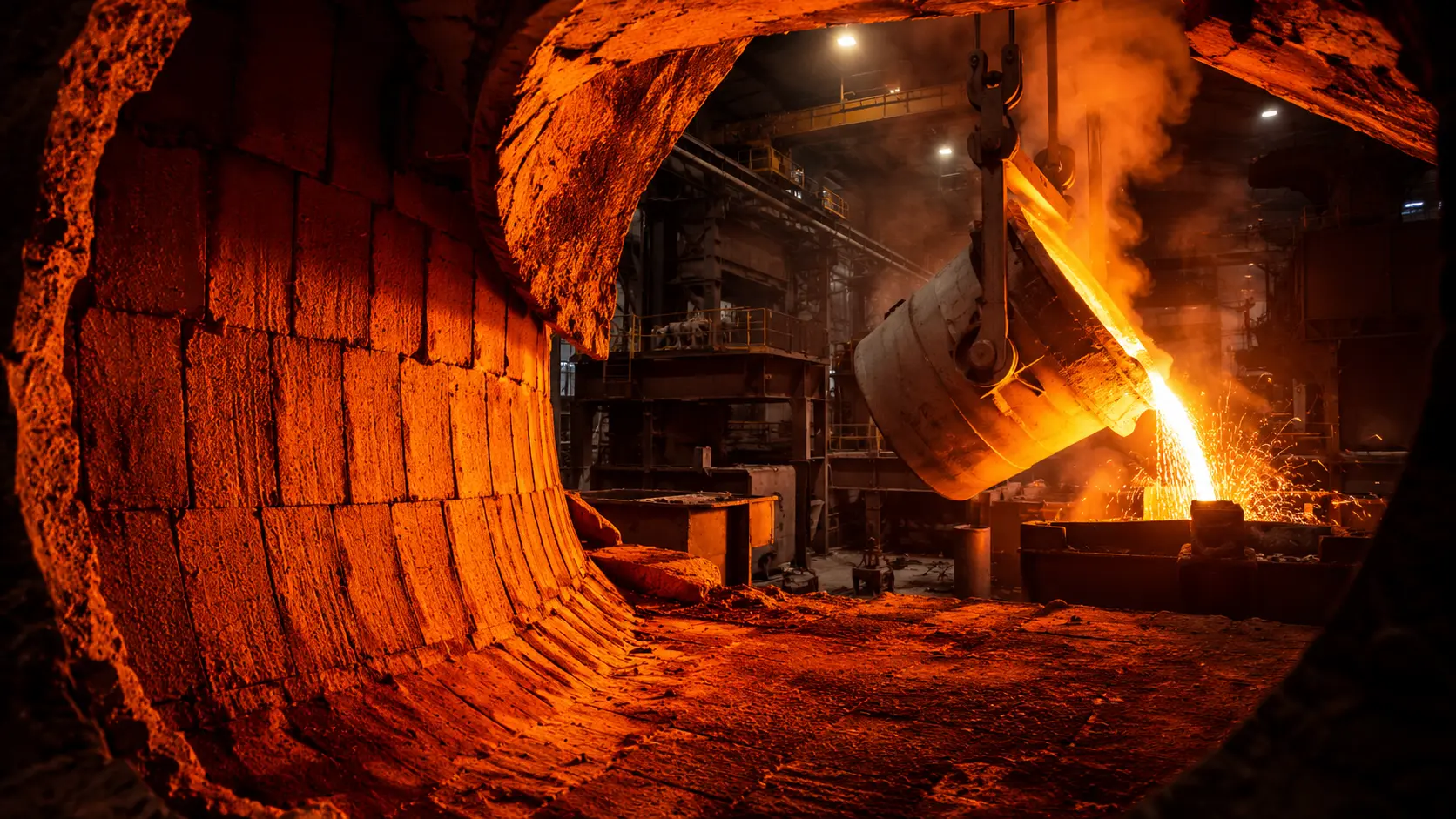
In industries where temperatures cross 1,000°C routinely, standard construction materials fail within hours. Steel softens. Concrete cracks. Standard bricks disintegrate. The only materials that survive are refractories.
Without them, steel plants cannot smelt, cement kilns cannot fire, and glass furnaces cannot melt. If you manage plant operations, specify industrial materials, or make procurement decisions for high-temperature equipment, understanding refractories directly affects your furnace life, fuel costs, and downtime
What Are Refractory Materials?
Refractory materials are inorganic, non-metallic materials capable of retaining their physical and chemical properties at temperatures above 1,000°C (1,832°F). The term comes from the Latin refractarius, meaning stubborn or unyielding, which describes exactly how they behave under extreme heat.
They are engineered to perform four core functions simultaneously:
High temperature resistance: Refractories remain structurally stable at operating temperatures that would melt or weaken conventional materials. Industrial grades typically handle between 1,000°C and 1,800°C, with specialist grades going higher.
Thermal insulation: Beyond surviving heat, refractories slow heat transfer from the furnace interior to the outer shell. This reduces heat loss, which directly cuts fuel consumption.
Mechanical strength: Furnace linings face physical stress from thermal expansion, material movement, and in some cases the weight of molten metal. Refractories maintain load-bearing strength even at peak operating temperatures.
Chemical resistance: Depending on the process, furnace environments contain acidic slags, alkaline compounds, or reactive gases. The right refractory grade resists chemical attack from whichever agents it contacts.
Thermal shock resistance: Rapid temperature swings during startup, shutdown, or process changes cause differential expansion within the material. Refractories with good thermal shock resistance absorb these stresses without cracking.
Types of Refractory Materials
Refractories are classified by their chemical behaviour, specifically how they react with the slags and gases present in the furnace atmosphere.
Acidic Refractories
Acidic refractories resist attack from acidic slags but are vulnerable to alkaline environments. Silica (SiO₂) is the primary acidic refractory. It performs well at high temperatures and resists most acidic compounds, making it suitable for glass furnaces and some ceramic kilns.
Basic Refractories
Basic refractories are stable in alkaline or basic slag environments. Magnesia (MgO) is the most common example. It handles calcium, iron, and manganese oxides well and is widely used in steel converters, ladles, and electric arc furnaces.
Neutral Refractories
Neutral refractories are chemically stable in both acidic and basic environments. They do not react with either slag type, which makes them useful in zones where both types of slag may be present. Alumina (Al₂O₃) and chromite fall into this category.
Common Refractory Materials by Composition
Fire clay: A naturally occurring aluminosilicate containing 25–45% alumina. It is cost-effective, widely available, and suitable for moderate-temperature applications up to around 1,400°C. Fire clay bricks are among the most common refractory products used in industrial furnaces globally.
High-alumina materials: When alumina content exceeds 45%, the material gains significantly higher refractoriness and better resistance to slag attack. Applications include blast furnace linings, ladle linings, and rotary kilns.
Silica: Handles temperatures up to 1,700°C and resists acidic slag well. Used in glass-melting furnaces, coke ovens, and open-hearth furnace roofs.
Magnesia (magnesite): high melting point around 2,800°C. Excellent resistance to basic slags. Standard in steel plant converters and electric arc furnace hearths.
Zirconia (ZrO₂): melting point approximately 2,715°C, low thermal conductivity, and good resistance to molten glass and metal. Used in specialist applications where other materials fail.
Why Industrial Furnaces Need Refractory Materials
Heat Retention
A furnace without proper refractory lining loses heat rapidly through its walls and floor. Refractory linings act as a thermal barrier, keeping the heat inside the working chamber. In a steel induction furnace, a correctly specified magnesia lining reduces heat loss enough to make continuous operation economically viable.
Energy Efficiency
Heat loss directly equals fuel or electricity cost. A compromised or poorly selected lining forces the heating system to work harder to maintain process temperatures. A steel plant with a 20-tonne electric arc furnace can see measurable increases in electricity consumption per tonne of steel when the lining degrades beyond a serviceable condition.
Equipment Protection
The furnace shell, whether cast iron, fabricated steel, or concrete, cannot withstand direct contact with molten metal, slag, or flames above a few hundred degrees. Refractory lining is the only barrier between the process and the structure. Without it, furnace shells fail rapidly and catastrophically.
Worker Safety
Furnace failures caused by lining breakthrough are among the most dangerous events in industrial plants. Molten metal or glass escaping through a compromised lining causes fires, explosions, and severe injury. Proper refractory selection and maintenance directly reduces this risk.
Longer Furnace Life
A correctly specified and installed lining extends the service intervals between furnace shutdowns. In cement kilns, rotary kiln lining life ranges from 6 months to over 2 years depending on material quality, installation quality, and operating conditions. Extending that interval by even a few months reduces shutdown costs substantially.
Reduced Maintenance Costs
Emergency relining costs far more than planned relining: emergency procurement, unplanned contracting, production loss, and possible equipment repair. Specifying the right material from the start reduces unplanned maintenance significantly.
Industries That Depend on Refractory Solutions
Steel plants: Blast furnaces, basic oxygen converters, electric arc furnaces, ladles, tundishes, and continuous casting equipment all require refractory linings. Steel production is the largest consumer of refractories globally.
Cement manufacturing: Rotary kilns operate continuously at temperatures up to 1,450°C. The kiln lining takes simultaneous thermal, chemical, and mechanical abuse. High-alumina bricks and magnesia-spinel bricks are common in cement kiln applications.
Foundries: Induction furnaces used in grey iron, ductile iron, and steel casting require linings that resist thermal shock during charge loading and tapping cycles. Fire clay and high-alumina linings are standard.
Glass manufacturing: Glass melting requires temperatures of 1,400–1,600°C in contact with molten glass that chemically attacks most materials. Fused-cast AZS (alumina-zirconia-silica) blocks and high-silica refractories are common.
Petrochemical plants: Reformers, crackers, and process heaters use refractory linings to protect the outer shell and insulate the process. Castable refractories and ceramic fibre linings are common in this sector.
Power generation facilities: Boiler furnaces, flue gas ducts, and incinerators use refractory lining to handle high-temperature combustion gases and resist ash and slag attack.
How Refractory Quality Affects Furnace Performance
The difference between a correct refractory specification and a poor one is rarely visible until something fails.
Downtime reduction: A lining that lasts 18 months instead of 10 months on a cement kiln gives the plant 2 additional months of production per campaign. Over 5 years, that adds up to significant output and avoided shutdown costs.
Fuel savings: In a glass furnace, the thermal conductivity of the lining material directly affects how much heat escapes through the walls. A high-quality silica crown with low thermal conductivity can reduce natural gas consumption per tonne of glass melted.
Production consistency: Inconsistent lining quality causes cold spots, hot spots, and variable process temperatures. In steel making, temperature variation in the ladle affects casting quality and increases rejection rates.
Operating cost control: Refractory cost as a percentage of total production cost varies by industry, roughly 2–4% in steel, higher in some speciality melting operations. Choosing a more expensive material that lasts longer often reduces total cost per tonne of product.
Choosing the Right Refractory Material
No single refractory works in every application. Selection depends on several factors evaluated together.
Operating temperature: The material must handle the maximum process temperature with a safety margin. Running a material close to its rated limit reduces service life.
Chemical exposure: Identify the slag type, gas composition, and any molten materials in contact with the lining. An acidic refractory placed in a basic slag environment will fail quickly.
Abrasion levels: Furnaces where solid charge materials are loaded directly onto the lining, or where metal movement causes physical wear, need materials with higher abrasion resistance.
Furnace design: Shape, joint configuration, and the method of installation (brick, castable, rammable, or precast) affect which product is appropriate. Not every material installs the same way.
Maintenance requirements: Plants with long shutdown intervals need linings that hold for extended campaigns. Plants with frequent, shorter campaigns may tolerate lower-life materials if they offer other advantages
The Role of Experienced Refractory Manufacturers
Specifying a refractory material from a datasheet is straightforward. Getting the right material for a specific furnace, process, and operating regime requires engineering judgement on lining thickness, joint design, expansion allowances, and heat-up schedules.
At UB Group Industries, Ludhiana, we manufacture and supply refractory materials for industrial furnaces, kilns, boilers, and high-temperature equipment across Punjab and India. Our product range includes fire bricks, high-alumina bricks, acid-resistant materials, and refractory castables, each specified for demanding industrial applications.
We work directly with plant managers and engineers during the selection process, because material choice alone does not determine outcomes. Installation quality and maintenance matter equally, which is why our capabilities extend from material supply to refractory works contracting and lining maintenance.
Conclusion
Refractory materials are not a commodity purchase. The right choice determines how long a furnace runs between shutdowns, how much fuel it consumes, whether the equipment survives long-term, and whether the working environment stays safe for plant personnel.
For steel plants, cement kilns, foundries, glass manufacturers, and petrochemical facilities, refractory selection is an engineering decision with direct financial consequences. A lining that performs well costs less per year than one that fails early, even if the initial price is higher.
The starting point is selecting materials matched to your actual operating conditions: temperature, chemistry, mechanical loads, and maintenance schedule, rather than defaulting to whatever was used in the previous campaign.
Looking for refractory materials for your plant or furnace?
Contact UB Group Industries to discuss your operating requirements. Our team works with engineers and procurement teams across Punjab and India to identify the right refractory solution for each application, whether that is standard fire bricks, high-alumina products, acid-resistant linings, or custom-specified castables
Call us or visit ubgroups.co.in to get in touch with our technical team